Monday, 30 July 2018

Samaritans Go Green


Last Wednesday saw the Mayor of Taunton Deane, Cllr. Catherine Herbert, visiting the Wood Street branch branch of Samaritans of Taunton and Somerset, in recognition of their 50th anniversary year. 

Pictured with Director Bob Cornes and Deputy Director Jackie Steele, the Mayor was able to meet the volunteers on duty and see the newly painted front door, now easily recognised as it is painted in Samaritan green!  

Bob explained “We wanted to brighten up the entry to the branch, making it stand out so that anyone can easily identify where we are in Wood Street. We are open to welcome callers from 9am to 9pm every single day of the year, without the need to make an appointment, whenever they need the support of one of our volunteers.”

The Mayor heard how the volunteers also offer emotional support on the phone, email and text to anyone in distress. The branch had received over 35,000 contacts during the last 12 months. 

For anyone interested in volunteering the branch holds an Information evening at 7pm on the first Thursday of every month at 16 Wood Street. “It is challenging but incredibly rewarding voluntary work.” said Bob, “Anyone with an interest in people and a caring nature can apply to join us at this exciting time in our history.”

Monday, 23 July 2018

SAMARITANS OF TAUNTON & SOMERSET clock up 500,000 volunteer hours in 50 years

SAMARITANS OF TAUNTON & SOMERSET held their Annual General Meeting at Trull village last week, celebrating their 50th year of providing valuable emotional support to those in need.

In welcoming supporters, listening volunteers and guests, including Cllr. Julie Fowler, Mayor of Ilminster, Director Bob Cornes said, ‘As we look back over all those years, we can reflect on a proud history of service to our local community and to the wider Samaritan organisation. I have calculated that our local volunteers have contributed over half a million hours of their own time offering emotional support to those who needed it.  What an extraordinary achievement.’

This year of celebration has been marked by a number of excellent events across the area, including dinner at Somerset County Cricket Club, with many more to come during the latter part of the year.

Although fundraising was not at the forefront when planning the celebrations, money was raised through the ‘Samaritans 50 Club’.

During the meeting, special thanks was given to long serving volunteers, many of whom had been working with Samaritans for over 20 years, as well as loyal supporters from Wiveliscombe, who held a splendid 50th Anniversary Dinner, raising over £1,000.  

Earlier this year the branch had a ‘Visit’ (the Samaritans equivalent of an OFSTED inspection) and were delighted to have received the verdict ‘The Branch Leadership Team together with all the volunteers make this an outstanding branch, supporting callers as well as each other. Every volunteer should be proud to be a member of Taunton Samaritans.’ 
   
In addition to traditional volunteer activities, which now include texting and emailing as well as listening, during a busy year, local Samaritans have been working with the occupational health staff at Hinkley Point, developed a partnership with GP surgeries to offer calls to patients and spoken to staff at every Jobcentre in Somerset to make them aware of the support that can be offered.

Samaritans of Somerset & Taunton have also been part of a county-wide committee to set up an emergency emotional support system in the event of a major disaster and provided support to schools in the aftermath of a suicide, continuing to be at the forefront of the ‘Postvention Scheme’, as well as attending the Recovery in the Park event at Lyngford park for recovering drug and alcohol addicts.

The team continue to offer talks to local schools and other organisations, and in total during the last 12 months answered 35,000 calls, 2000 emails and 2000 text messages.

Samaritans’ core purpose is to support anyone who is struggling and who needs to talk, and will be there 24/7, with the help of its amazing volunteers who give up their time to make a real difference to the lives of callers.

Why not join us? Want to find out more? Then get in touch.

Local helpline - 01823 288 998 (local call charges apply)
National free phone: 116 123
Email Samaritans: jo@samaritans.org
Visit: 16 Wood Street, Taunton, Somerset, TA1 1UN 9:00am - 9:00pm (no appt. needed)

Wednesday, 4 July 2018

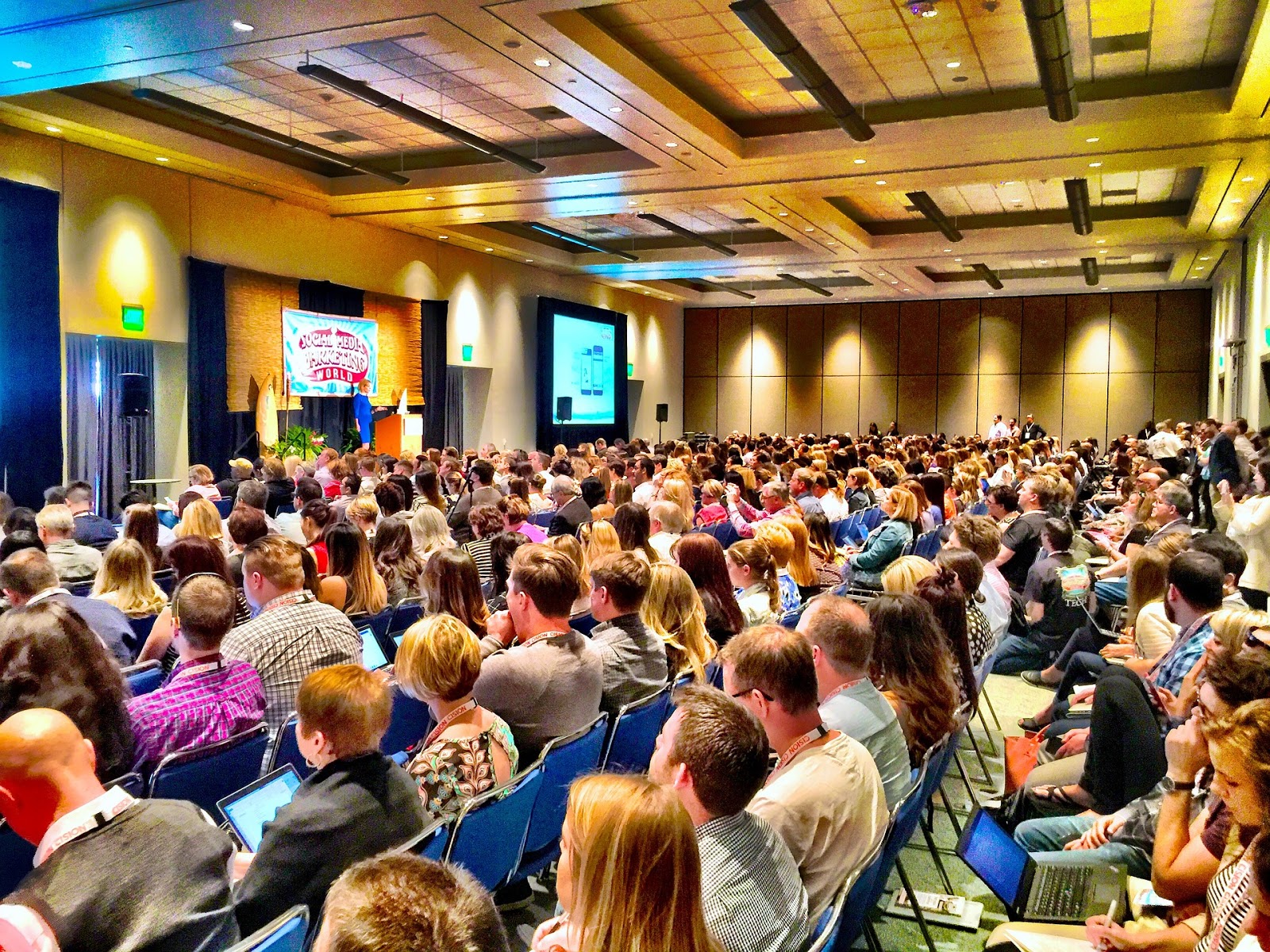
WHAT MAKES A GOOD PRESENTATION?


I attend an awful lot of meetings, in addition to a number of conferences and workshops. By their very nature these events often involve experts, lecturers and industry spokespeople giving presentations.

To make the most of my time, and the cost of attending these events, I am keen to get as much out of the sessions on offer as possible.

In measuring the success of such events, in terms of the balance between my time and the knowledge and inspiration gained, the topics to be covered are usually, on the surface at least, interesting. Oh, how I wish that remained the case. On almost all occasions I am left frustrated and disappointed.

I do a fair bit of public speaking and presenting myself. Although I am far from perfect, I like to think that I understand, and have gained a degree of competence, in getting to grips with the basics of what makes a good presentation; especially when it comes to using visual slides (their quantity, quality and content), engaging and gauging the response of my audience, pacing myself, and keeping to time.

The advent of increasingly sophisticated technology, has its downside, bringing with it the danger of ‘Death by Powerpoint’. Sadly, this is all too evident, even at the most sophisticated events, with high level international speakers. One speaker recently attempted to cover his topic with 34 slides(?!) in the 12-minute slot allocated, many of which had quite complicated equations and statistical notations; he failed miserably in getting across the key points in a concise and meaningful way.

At a recent international event, even with many of the presentations being held in tandem, I managed to sit in on 37 different sessions; despite having lost the will to live by the end of the first morning. The standard of speakers was, almost without exception, truly appalling. I only wish this was the exception rather than the norm.

What I fail to understand is why it is, that if someone is representing an organisation, and presumably hoping to influence an audience, they pay scant attention to the quality and content of what they are delivering. 

Prior preparation does almost always prevent poor performance, and most of us have access to support in the form of someone who can offer an objective view on the content and clarity. I prefer to speak without notes, as I feel that the delivery is stilted when a script is used, but if asked to present for a certain length of time I always check my timings; for me, it is a point of pride to get it right. If the option is available, one of the best ways to assess one’s performance is to be video-d; a sobering experience if ever there was one, as you see yourself waving your arms around, scratching your head and ‘umming’ for all it is worth!   

It may be stating the obvious, but it is apparent that those with academic clout and who hold positions of high esteem do not always make the best speakers or presenters.

It is an art, one that I am striving to master.

Tuesday, 26 June 2018

Vegan Wines

Article in Somerset Living - July 2018 

There seems to be a heightened interest in vegan food, as shown in a recent Somerset Living article. Eating and drinking habits that were once thought to be just a passing phase for those keen to latch onto the latest fad, are now increasingly mainstream. It seems to me that in our increasingly chaotic lives, a move towards a more ethical lifestyle can only be a good thing both for ourselves and the planet.

It is no surprise then that our supermarkets have been quick to recognise this trend and have been keen to jump on the band wagon.

Vegans to tend to be much more particular than the rest of us when it comes to what they eat and drink, as animal products are included in the production of many different types of food and drink, often in the most unexpected ways. When it comes to pleasing our guests’ dietary requirements though it can be easy to forget what’s in your wine rack.

Whether or not a wine is ‘vegan friendly’ very much depends upon the producer and the vintage. Whilst wine does not include animal products, it is the fining ingredients that are used in the winemaking process that often contain animal by-products.

With the exception of those of us who are fans of unfiltered wine, we expect our glass of wine to be clear rather than cloudy. Fining is the process used to help eliminate proteins, yeast and other molecules that can cloud the wine. The most common ingredients used in the fining process include casein, a milk protein, albumin, found in egg whites, gelatine and fish bladders. Although they are just processing agents, and do not remain in the wine, for strict vegans this is a definite no-no.

Fining is not essential, but it does speed up the winemaking process, enabling the sparklingly clear finished wine to hit our shelves that much quicker.
The good news for vegans is that carbon and clay based fining ingredients are being increasingly used but do be aware that not all wines labelled ‘organic’ or ‘biodynamic’ are necessarily vegan friendly, especially if ‘preparation 500’ is used, which is made from decomposed cow dung buried in a cow horn.

When it comes to complementing a vegan diet, you may be tempted to select a white wine rather than a heavier, “meatier” red, but do bear in mind that red wines can work well with hearty bean and lentil-based stews, mushrooms and aubergines. The Barnivore Vegan Alcohol Directory is a great website to visit with a database of over 38,000 vegan-friendly wines, beers and spirits. Just type in the name of any wine and it will tell you whether or not it is vegan.

Look out also for minimal-intervention wines that have lower levels of sulphur, such as Earth’s Essence, South African Shiraz, 14% abv. £6.99 produced for Aldi. Wood from Rooibos and Honeybush plants are used as natural anti-oxidants to preserve the wine, which has a juicy touch of sweetness along with the aroma of blackcurrant forest floor and spice.

Most supermarkets now offer a wide range of vegan wines. Notably, the Co-op has taken the lead in being open about listing ingredients in its own wines, 55% of which are now suitable for vegans, including their well-priced Irresistible Casablanca Valley Chilean Pinot Noir, 14% abv. £7.99.

At M&S just over half of their range is now suitable for vegans, including Barossa Valley, Viognier, Australia, 2017, 13%abv, £10. Silky smooth, with a typical aromatic apricot nose, it has enough body to go with the heartiest of vegan dishes. Waitrose boasts over 700 vegan wines in their range and their San Leo Brut NV Glera Italian Prosecco, 11%abv, £10.99 gets the thumbs up. Majestic has helpfully grouped its vegan range together, including a ‘meaty’ Vinalba Malbec Bonarda 2016, 14%abv, £9.99 from Argentina.

Sainsbury’s carries over 245 vegan wines, all clearly labelled as such. Their Taste the Difference Beaujolais-Villages Coteaux Gratiniques, 13% abv, £9, from one of oldest houses in Beaujolais at the foot of Mont Brouilly is made from quality grapes from vines grown on the ancient granite soils, which gives this wine its elegant and complex finesse.

T: 01460 66668
W: lovelylindaloveslife@blogspot.com
Twitter : @LindaVijeh

Monday, 25 June 2018

Noah's Ark


Noah – Alive and Living in England


The Lord came unto a descendant of Noah, who was now living in England and said, ‘Once again, the earth has become wicked and over-populated, and I see the end of all flesh before me.  Build another Ark and save two of every living thing along with a few good humans.’ He gave Noah the CAD drawings, saying, ‘You have 6 months to build the Ark before I will start the unending rain for 40 days and 40 nights.

Six months later, as the skies above began to darken and cloud over, the Lord looked down and saw Noah weeping in his garden – but no Ark. 

‘Noah!’ He roared, ‘I’m about to start the rain!  Where is the Ark?’

‘Forgive me, Lord’ begged Noah, ‘but times have changed. Before I could begin I needed Building Regulations Approval and I’ve been arguing with the Fire Brigade about the need for a sprinkler system. My neighbours claim that I should have obtained planning permission for building the Ark in my garden because it is development of the site, even though in my view it is a temporary structure. We then had to go to appeal to the Secretary of State for a decision.

Then the Department of Transport demanded a bond be posted for the future cost of moving power lines and other overhead obstructions to clear the passage for the Ark’s move to the sea. I told them that the sea would be coming to us, but they would hear nothing of it.

Getting the wood was another problem. All the decent trees have Tree Preservation Orders on them and we live in a Site of Special Scientific Interest, set up in order to protect the spotted owl. I tried to convince the environmentalists that I needed the wood to save the owls – but no go!

When I started gathering the animals, the RSPCA sued me. They insisted that I was confining wild animals against their will. They argued that the accommodation was too restrictive, and it was cruel and inhumane to put so many animals in a confined space.

Then the County Council, the Environment Agency and the Rivers Authority ruled that I couldn’t build the Ark until they’d conducted an environmental impact study on your proposed flood. I’m still trying to resolve a complaint with the Equal Opportunities Commission on how many disabled carpenters I’m supposed to hire for my building team. The trades unions say I can’t use my sons, and insist that I have to hire only accredited workers with Ark-building experience.

To make matters worse, Customs and Excise seized all my assets, claiming I’m trying to leave the country illegally with endangered species. So, forgive me Lord, but it would take at least 10 years for me to finish this Ark.’

Suddenly, the skies cleared, the sun began to shine, and a rainbow stretched across the sky.

Noah looked up in wonder and asked, ‘Lord, you mean you’re not going to destroy the world?’  ‘No’ said the Lord. ‘The Government beat me to it.’

Thursday, 21 June 2018

AAWE Annual Conference - Brexit and the Impact on the UK Wine Industry

American Assoc. of Wine Economists Annual Conference, Cornell Univ. NY. Presentation on the impact of Brexit


Unlike my esteemed colleagues I cannot claim to be an academic, but as a substitute for a university education, when it comes to food and wine I can offer unrivalled passion and enthusiasm spanning more than 40 years; from volunteering at the Chicago School in exchange for tuition at the Chicago Wine School, my appointment as chef to the UK Ambassador to the UN, and my return to the UK over 20 years ago to become a Senior Hotel & Restaurant Inspector for a major guide, all without any formal training or qualifications.

I now spend my time supporting service and hospitality providers across the industry in giving the ultimate customer experience, and as a journalist, writing about the issues the industry is facing. 

As a WSET accredited tutor I am immensely proud that I have always enjoyed a 100% pass rate for my students. In considering the impact of the Brexit vote on the UK wine industry, let me set the scene.

My final presentation, which I have just delivered, (see link)... our local vineyard 'Wayford' got a special mention for their award winning sparkling Pint Noir, and the bottle I brought along with me is being served at lunch today!

https://drive.google.com/open?id=15gNNib3Zzz5MhYI4wCZEtytSU3pxJgY-


The importance of the UK cannot be underestimated. The UK is at the heart of the global wine industry. We are the 5th largest economy worldwide, the sixth largest wine market in the world and the second largest trader in wine by volume. The UK accounts for nearly 15% of the world’s wine imports. We consume over 15 million hectolitres of the stuff. The Wine and Spirit Trade Association attributes £17 billion of economic activity in the UK to wine.


No mean achievement for a small island nation. As just one of 28 EU member states we have certainly caused some turmoil. We punch well above our weight, as we have done for centuries, so I pose this question to you, why should we be afraid to go it alone? Certainly there are a number of reasons for concern, but I am an optimist, a glass half full person. I believe that if you think the worst will happen, eventually it will. We are the engineers of our own destiny.

Since the Brexit vote almost exactly two years ago, one could be forgiven for thinking that politically the UK is in a state of disarray. It is, and it is not helpful.

There has been a significant amount of negative publicity, largely promulgated by Remainers unable to accept the unpalatable result of a democratic vote. Despite the predictions of doom and gloom from the pundits we know all too well how frequently they get it wrong. In 1977, Ken Olsen, founder of the Digital Equipment Corporation Said, “There is no reason anyone would want a computer in their home.” Who predicted 9/11, the financial crisis of 2008, or the election of Trump as President? 


What is really having an impact is the current uncertainty, which is fuelling fear, resulting in an aversion to risk; an unwillingness to take any chances; a wait and see game, and it is the end consumer that suffers. Those in the business of making and selling wine know all too well just how unstable an industry it is. But, we cannot continue to make decisions based on fear and what might or might not happen. Uncertainty is uncomfortable but the notion of certainty is absurd.

Of course, good news does not make headlines. Yes, we are drinking less wine, but what is not widely reported is that revenue has increased.    

For me, twice divorced myself, but still hopeful of finding a third husband, Brexit has all the hallmarks of a bitter marriage break up. One partner wants out and the other is determined to punish them as a result. In the end both parties, and any offspring, are the ones that suffer; the only ones making a killing are the lawyers, at the expense of those involved in the UK wine industry, and  consumers. Of immediate concern to the UK industry as a whole in the UK has been the impact on labour, which in recent years has largely been from Eastern European countries. Then of course there are those subsidiary industries such as transport, storage, wholesalers, retailers, both on and off trade.

There is no doubt that when it is all done and dusted (and the bets are on as to whether or not we will actually leave) there will be an impact in the wider context, but we do not have to sit back as placid bystanders with a victim mentality. 

In considering the strengths and weaknesses of the UK wine industry we do not need to be conscious of both internal and external threats to stability and growth but it is evident that we must focus on maximising our opportunities and capitalise on those unique characteristics that make us as so special. 

At long last UK vineyard owners have got their act together and we are now seeing a greater degree of cohesion in their approach, both with regard to their ability to lobby the industry as a whole and also in relation to marketing activity, which until now has largely been spasmodic and uncoordinated. Much of this has been pioneered by the likes of Ridgeview, Nyetimber, Camel Valley, and my local vineyard, Wayford, whose wines have gained international recognition; and not before time. 

30 years ago, when overseeing the official entertaining for the British Embassy to the UN, my attempts to promote British chefs, products and wine were met with derision and incredulity, until I appeared on the front page of the New York Times. This is no longer the case and we can hold our heads up high. 

Brand Britain is much sought after and despite high production costs our premium sparkling wines are much sought after. Far from seeing a slump in investment, in recent months both Pommery and Taittinger have invested in UK vineyards. We are seeing a shift towards quality over quantity. Whilst future trading arrangements with the EU still unclear that is no reason to stand still.
Our wines are never going to compete with the bland New World wines filing our supermarket shelves, but neither should we want to.

When taking into account the way in which consumers buy, there is always the danger of assuming that price is the key to success, and moving straight to the purchase based solely on price. This is a common trap that those wanting to make a quick buck all too easily fall into. You may make a sale the first time around, but you should be aiming for repeat business, and increased exposure to new markets. This can only be done by active engagement with the end user, in a meaningful way, responding to their changing needs. This is not rocket science, but it does take time and effort and is not achieved by churning out the same bland products in the same old way. The world is changing and if we do what we have always done, we will not get what we have always got. We need to give customers a reason to buy from us.

There are really only a handle of reasons that anyone will buy anything, including wine. Although price is an important factor, it is just one of many. In the UK the average price of a bottle of wine now hovers at around £6 and is on the rise. but we buy the things we do for a variety of reasons. 

How many of us have set ourselves a budget for something, a house, a car, a holiday perhaps, and exceeded that budget because we wanted it so badly? We all have at some point in our lives. If price really is the issue you may well settle for a bottle of supermarket ‘special offer’ plonk. If there is nothing to drink in the house and friends drop by you may well pop to the local corner shop (yes, we do still have them) and pay over the odds for a bottle to save time. 

On a girls’ night out, what better way to get in the mood for a good time but bubbles, which accounts largely for the rise in Prosecco sales in recent years. However, the Prosecco loving crowd will eventually grow up and move on. Sales of Prosecco are already on the wane as demand has exceeded quality supply and the market has become flooded with inferior products. Want to make someone look good and feel good for a special birthday or treat? Then you might be inclined to push the boat out and spend a few extra pennies on something individual that you know they will enjoy. 

And finally, the money no object, out to impress purchase, Penfolds Grange perhaps, Opus One, Petrus, or a bottle of Krug. I have always been a Champagne girl myself. It is only by understanding our customers’ needs, at that particular time, that we can make them want to satisfy that need with what we have on offer.

On the subject of price, much is made of the rise in prices as a result of Brexit, but scant regard is paid by the average consumer to just what it is they are getting for their fiver. We in the industry know the difference, but what are we doing to educate our customers? Or is it just that we choose not to?

So, we have come full circle. In 1973, the year that the UK entered into what was then the European Economic Community, I was 19 years of age. Like many of my generation, I was just waking up to the joys of a glass of wine, usually with a meal. The choice on offer was largely limited to a handful of off dry whites, with a bottle of chianti, in its straw basket, or a bottle of Claret, reserved for a special occasion, and ordered by a man. Here we are then, in 2018, when wine drinking has become the norm in the UK, (watch out though for the trend in designer gins). In all but the most serious restaurants, we are still offered a dumbed down version of wines to suit the profit margins of the greedy shareholders, who pick their wine lists from a limited range on offer by their wholesaler. The only difference being that now we order our glass of wine by grape variety, with little thought for any food pairing. Who cares where the wine was made or by whom? It is Merlot or Sauvignon Blanc so it must be OK. Indifferent wine that is served by untrained, poorly paid staff, who neither know nor care. Oh, and yes, it is served in either 175ml. or 250ml glasses, despite the law requiring 125ml. to be offered, what used to be considered a normal sized glass of wine. We really are missing a trick.

There are at least two things that we can agree with on Brexit. Firstly, nobody has any real idea of what is going to happen next. Secondly, we are self-indulging in the ‘blame game’, often using Brexit as the excuse for those head line grabbing events that dominate the UK media. 

Since the vote in 2016, on the one hand Brexiteers have been dredging up any positive economic data they can get they hands on, in denial of the doom and gloom predictions, whilst Remainers keep their focus on the declining value of sterling as more proof of the foolhardiness of leaving. 

The wine business has been as guilty of indulging in this pre-emptive ‘blame game’ as anybody else. For those in the industry this may make for a painful reality check. We can stay stuck in the rut of mediocrity or we can take action to get out of it by ensuring that those who represent us, and our wines, are well trained, well informed and passionate about imparting that knowledge to those who after all pay they wages – the customer. 

I leave you with the words of a prominent UK hotelier – ‘I no longer chase ratings but when we did, I used, and still recommend, ex senior hotel and restaurant inspector Linda Piggott-Vijeh for gap analysis. She is scarily straight, incredibly passionate, takes no prisoners and is ultimately very productive.’ Attitude IS everything.

© Linda Piggott-Vijeh June 2018.


Monday, 11 June 2018

FRIENDSHIP


If the number of friends in a person’s life is a reflection of who that person is, then I have been truly blessed.

Twice divorced, with no surviving parents, and no children, in the absence of close family, my friends have become my family. I do have a sister that I am very fond of, but we are like chalk and cheese, and although we speak every few weeks, we only see each other every couple of years or so.  

Of those I am closest too, emotionally if not physically, there are probably a dozen or so friends that I know I can call on if push comes to shove, and need support in one of the many crises that seem to frequent my life. Friends are those you can call on 24/7 knowing that when the chips are down they will be there, offering whatever is needed, no questions asked. The will go that extra mile and put themselves out on your behalf. Almost without exception I have known those that I consider to be my real ‘friends’ for 40 years or more, and been through thick and thin with them. Of course, there are friends and friends.

Many of the people we see on a daily basis and socialise with regularly can also be counted as friends, but in a different context. No so much ‘fair weather’ friends but those who once we move on in our lives, also move on, as their priorities and lifestyles change too. It does not mean that we don’t keep in touch but the contact, however frequent, remains on a different level.  

These reflections on friendship and what it really means have been brought about by my current circumstances.

As a result of my involvement with wine, I am in the privileged position of having been invited to present a paper on ‘Brexit and its Impact on the UK Wine Economy’ at the annual conference of the American Association of Wine Economists. This year the conference is being held in New York State, at Cornell University. What an honour!

I had lived and worked in New York for some years, eventually returning to the UK in the mid-1990s and had made a number of lasting friendships. The last time I visited was 6 years ago, when sadly I was unwell, which rather spoilt my enjoyment and limited my ability to socialise.

So, this time, despite it costing me an arm and leg to attend, the opportunity to visit New York and catch up with old friends was one which I could not turn down. Thus it was, that I arrived at JFK airport yesterday afternoon, to be met by my friend Debbie, who I met in 1993. We hardly ever communicate, perhaps once or twice a year, but I was thrilled to learn that she wanted to come up to Cornell with me, thereby solving the problem of how I was to get from the city to Ithaca, five hours drive up-State.

The flight was on time and I fully expected to see her there waiting for me as I emerged remarkably rapidly from immigration and customs. No Debbie. OK, so I will text or phone her to let her know I had arrived. Problem. My mobile phone refused to cooperate, and silly me, I had not thought to make a separate note of her number, let alone her address. Bright idea. I will send her an email and maybe she will be able to pick it up. ‘Queued for later’ was the only response I could get. So what to do? Well, no other option really but to sit and wait it out. 

The arrivals area of JFK is not the most salubrious place to spend one’s time.
Two hours later I was schooling myself not to panic. After all, there was little I could do. Maybe she had arrived and I had not recognised her. Debbie is black, so, quite irrationally, I began to wander around surreptitiously looking at all of the black women around my age to see if perhaps they might be her. It turns out that later, when we eventually met up, when I had seen someone out of the corner of my eye approach the ‘help desk’ that Debbie, having been at the airport for two hours also, had been scrutinising all of the unaccompanied white women in the same way. Boy did we laugh about that!

The evening was spent ‘catching up’, chatting away as the years since we last spent any time together also fell away. We just took up where we last left off.  And now, here I am, sitting in her kitchen, having totally forgotten over the years that she is a staunch royalist (thank goodness for the ‘British’ gifts I had brought) and also obsessed with The Beatles, drinking my early morning tea out of a china cup and saucer; Debbie, a committed coffee drinker, and big mug person, had remembered my preferences after all these years. That is what friendship is all about. I have the feeling that we are in for a fun few days wowing the international wine world at Cornell.

It is important though that friendships should not be abused; there has to be give and take on both sides. The last 24 hours has made me all too aware that to have friends one needs to be a friend, in good times and bad. Friendship is a two-way street.

Oh, and did I mention that when I get back next week, my neighbour, and newest friend, will have put milk in my fridge, kept and eye on my post and bought flowers, leaving a ‘welcome back’ message on the whiteboard we keep in the hallway to communicate with, tongue in cheek.

I really am blessed.