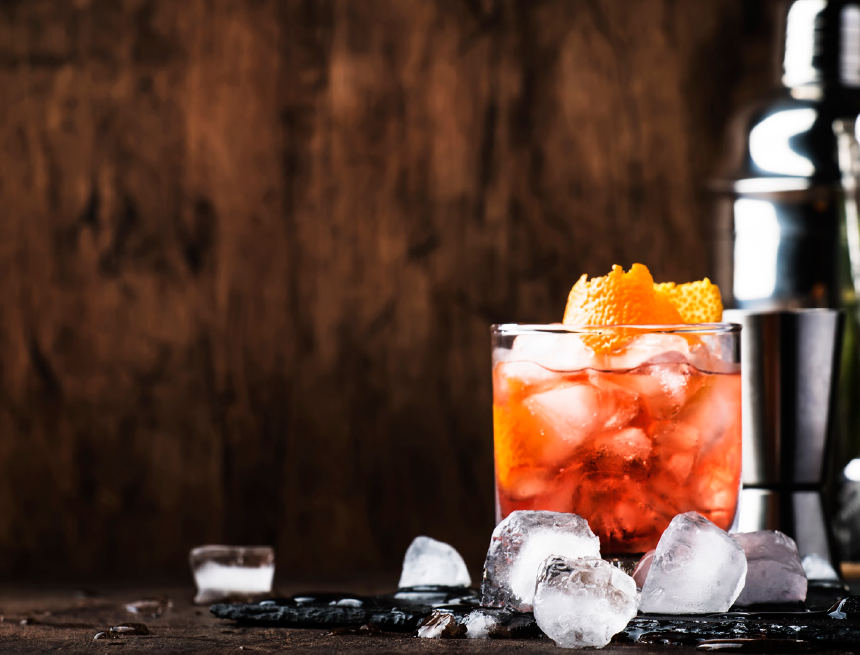
Monday, 30 November 2020

BITTER TRUTH


Drink connoisseur Linda Vijeh gives Living an overview of bitters 
and shows us how to make our own


I just love bitter flavours, much preferring the punch they give when compared with overly sweet sickly
concoctions, although I confess to being partial to Tia Maria with cream on the odd occasion.
 
The introduction of what is known collectively as ‘bitters’ can make or break a drink, and frequently forms a key part in the resulting character of many cocktails, giving a complexity, bringing maturity and great depth.

In general, they are not intended to be consumed neat due to the bitterness of their flavour, but when added to a classic cocktail such as an Old-Fashioned, or a Manhattan, they add a robust woody spiciness, with hints of tamarind, clove and cinnamon. 

Bitters originally started life as a medicine. The best known of these is Angostura bitters, which despite its name contains no medicinal bark from the angostura tree.

It was created in 1824 by Dr Johann Gottlieb Benjamin Siegert as a remedy for sea sickness and stomach ailments. 
The original recipe was named after the town of Angostura in Venezuela. Exports to England began in 1830, and the Royal Navy took to adding a few dashing of Angostura bitters to gin, to make what is now known as ‘Pink Gin’, which was said to alleviate stomach ailments.

The list of ingredients used to make traditional bitters reads a little like a who’s who of archaic remedies – a bitter agent, often a tree bark or root, is macerated along with up to 30 or 40 botanical ingredients, including herbs, flowers and spices in strong spirit.
The resulting alcoholic strength of bitters varies widely across brands and styles but is often as high as 44% abv, hence a little goes a long way. 

The Ancient Egyptians are thought to have infused medicinal herbs in jars of wine. The ability to distil alcohol, developed in the Middle Ages, made it possible to produce more-concentrated herbal bitters and tonic preparations.

Many digestive bitters are often used in cocktails and are also typically consumed in many European and South American countries, either neat or with ice at the end of a meal. In Trinidad and Tobago, Angostura bitters are often added to coffee.

Some notable examples of cocktail bitters that are quire readily available include:
• Campari (Novara-Milan, Italy): A key ingredient in quite my favourite cocktail at the moment, which many of us will be familiar with, Negroni, made with equal parts gin, red vermouth and Campari, topped up with lots of ice.
• Aperol (Padova, Italy): I am less keen on this as it is a little too sweet for me. It is popular though as an Aperol Spritz, with Prosecco, topped up with soda water.
• Cynar (Padova-Milan, Italy)
• Fernet-Branca (Milan, Italy)
• Jägermeister (Germany)
• Suze (France)
• Underberg (Germany): Sold in 20cl. paper-wrapped bottles, and made with herbs from 43 countries, matured for months in Slovenian oak barrels, this is marvellous as a pick-up after over-indulgence the night before. I can highly recommend it.
• Unicum (Hungary)

Homemade bitters are easy to make, but it does take about four weeks to complete. By doing this you can personalise the recipe to suit your own taste, using a variety of herbs and spices.

How to make your own bitter: The recipe below is for an aromatic-style of bitters, with an emphasis on orange, and is great for use in a variety of cocktails.

• 1 pt. neutral alcohol – vodka or white rum
both work well.
• Dried peel from one orange, without the
pith.
• 1 tsp. cardamom seeds
• 1 tsp. coriander seeds
• ½ tsp. caraway seeds
• 6 whole cloves
• 1oz. sugar

There are two main ways to make bitters. This method combines all of the botanicals and infuse them in the spirit together. Put all ingredients in a jar, keep it in a dark place and give it a good shake every day. Test it occasionally by smelling it and putting a drop or two into water. It should reach the required level of intensity after about four weeks.



Thursday, 19 November 2020

Response to comments on postponing the 2021 Somerset County Election

The political posturing and propaganda in the wake of this week's Somerset County Council full council meeting seems intent on continuing, perhaps as a deliberate distraction from the more important immediate challenges we all face?

On 8th October the Secretary of State issued an invitation to all Councils in Somerset to submit a business case regarding Local Government reform, with a final submission date of December 9th.
The following week the Secretary of State advised that if any authorities being considered for Unitarisation asked for the 2021 election to be deferred it would look upon it positively.
The timetable given for the process is Feb/March 2021 Consultation, June/July Decision. This means that should next year's planned election take place the consultation period would fall in the middle of the purdah election period.
Along with the two other Counties involved, North Yorkshire (Conservative) and Cumbria (Lib Dem in Coalition with Labour) SCC have decided that for this reason a deferral would be requested and after a lengthy debate, was agreed by a significant majority in a named vote.
This deferral is already precedented in a number of areas including most recently Buckinghamshire.


The questions I pose to those opposed to such a measure are:-

1. How can you justify spending £1m on an election which will be for only one year?

2. How can you justify planning for an election which has a planned consultation during the course of it on the future of that authority?

3. If you believe that there is a democratic deficit then why would you not resign and fight a by election on May 6th 2021?

4. If you believe it is a year of unjustified extra allowances why not simply refuse to draw your allowance and ask for it to be spent on services?

Wednesday, 7 October 2020

Supporting local businesses - short back and sides!


SHORT BACK AND SIDES PLEASE

Given that many of us have not been out and about much in the last six months, it is hardly surprising that when attending virtual meetings we have seen both men and women looking, shall we say, increasingly in need of a little grooming!

Starting with a short, neat, cropped style at the beginning of the year, my hair was certainly looking rather unkempt and becoming increasingly unmanageable.

As I have been shielding, I have been very reluctant to resume any activities that might involve me in close contact with the general public.

My regular hairdresser, Hebron, on East Street, Ilminster, naturally keen to recoup some of the business they had lost during lockdown, contacted me in August. At the time I was not quite ready for such public exposure, but in September I spoke to Claire Wheatley, who has been doing my hair for over 20 years. She was very reassuring in explaining the measures she had put in place to ensure customer safety, and also suggested that I might feel more comfortable if she was able to arrange for me to be in a private room. With the added incentive to be a ‘model’ enabling one of her trainees to ‘practice’ on me, I decided to give it a go. I have been a model at Hebron on a number of occasions over the years, and well remember a vibrant orange perm. I have also been bald on two occasions, once as a result of chemo., and a second time for charity. It is very liberating. One of the lessons I have learnt is that no matter what the result, it is only hair, and will always grow back!

On arrival at the salon I was confronted with a barrier to entry, my temperature was taken, and my personal details noted in case the need should arise for ‘track and trace’. My personal possessions were put into a separate bag, and I was assured that towels and robes were washed after every use. With this level of efficiency and caution I felt confident in having my locks shorn. Under the supervision of Kelly, Sophie then gave me one of the best cuts I have ever had. Two hours later (no cups of tea at the moment sadly but water and orange juice were available for a small charge) I came out looking like a different person!

All of our local businesses have suffered dreadfully as a result of the pandemic and if we want to keep our communities thriving we must be prepared to venture out and support them, albeit with concern for our safety and welfare.

Linda Piggott-Vijeh

Combe St. Nicholas  

Tuesday, 29 September 2020

LITERARY DRINKERS


My interest in all things alcoholic is well known, as is my passion for the written word.  

Notwithstanding the current crisis caused by the Coronavirus, I love nothing more than a cosy night at home on my own, curled up with a good book and a glass of wine.  

With plans for the 5th Ilminster Literary Festival well and truly scuppered this year, we are actively working on a great line up of authors for whenever we can hold our next one.  

We always aim to have authors, both local and from further afield, that will stimulate our minds and entertain us. It was a delight this year to hear from the winner of our writing competition, Alison Templeton from Norton-sub-Hamdon, that she ‘started creative writing through the festival: during the 2016 festival I went to the creative writing workshop led by Rachel Godfrey, and have been writing ever since.’ Just what we hoped to achieve.   

It is universally accepted that many of us myself included, have become rather fond of the bottle since lockdown. This got me thinking about certain famous writers who have been known to be partial to a tipple, or two.  

There is plenty of evidence that some of our most prodigious and famous authors had, shall we say, a little drink problem. Hemingway, F. Scott Fitzgerald, Tennessee Williams, Dylan Thomas, Edgar Allan Poe, James Joyce, the list is endless. It has not escaped my attention that the key protagonists tend to be men! 

There is of course the argument that alcohol, in moderation, helps to oil the wheels when it comes to mental activity and unleashing that creative genius we all so admire. According to one study, alcohol can actually increase creative cognition and improves problem-solving skills too. Many writers say that alcohol helps to rid them of inhibitions, enabling them to write more freely, and to survive the solitary life of a writer.  

I have an enquiring mind and sometimes all it takes is one simple question to gather the most interesting information, so this summer I asked a number of the authors we had earmarked to appear at the Lit. Fest. what their favourite tipple is. Here is a taste of what is still to come. 

Poet Melanie Branton, had this to say –  

‘In my last collection, I included a paean to my favourite drink. As I am Somerset-bred, the
choice was a no-brainer.’
I'm optimally placed
when embroiled and encased
in the ambit of cider's pure amber embrace.

I'd rather drink cider than soda or juices,
its sedulous sedative soothes and seduces,
so don't be sadistic and suddenly say
I have to drink soda, not cider, today. 

Crossword setter for The Times, Tim Moorey, who was all geared up to provide tips on solving cryptic crosswords, tells me that he believes in everything in moderation and survives on a morning cup of Twinings Decaf Breakfast Tea, with a Cointreau in the evening; just the one mind, and not every night. 

In addition to sharing his knowledge of the history and techniques of opera Professional Opera singer Tim Mirfin, was keen to expand on his favourite tipple: 

‘After brief reflection I am going to plum for a big, fat, round red wine, a Barolo. This is not a
particularly well-reasoned choice but one based on happy memories. It conjures up long,
blissfully unrushed, multi-coursed meals in large groups basking in Italian sunshine and
wallowing in the feeling that this is how we should all be living. Drinking it in cold, dark,
rain-sodden British winters still can't dim the association. It also feels, to me at least, a treat
drink, the prospect of an indulgence of tragic rarity. Heavy Italian reds are the sort of thing
professional singers need to allow themselves only once they've checked in their diary
that the succeeding day is reasonably clear - especially if you have finally acquired enough
self-knowledge to be sure that it won't just be the one glass...’     

The Noir Collective, a group of three award-winning writers of psychological fiction, also shared their secret tipples with me.  

Katharine Johnson prefers an Aperol spritz, ‘Because it reminds me of happy times in Italy where two of my books are set.’
G D Harper, a man after my own heart, plumped for an Underberg, a quirky German herbal digestif which is sold in little 20ml. bottles. Devotees of the drink collect bottle tops which they send to the company, receiving exclusive merchandise in return. He is the proud owner of a leather Underberg bullet belt which holds 12 bottles. Ideal party wear!
Finally, Helen Matthews gets us thinking beyond some of the miserable weather we have been experiencing. ‘On a summer evening it has to be gin and tonic, preferably with Bombay Sapphire gin, unflavoured tonic and a slice of lime. The distillery, at Laverstoke Mill, Hampshire, close to where I live, is mentioned in the Domesday Book and was a paper mill from 1719 before it was converted into a distillery.’ 

And as for me, I am rather partial to a Negroni, made with equal measures of gin, red vermouth and Campari, garnished with orange peel.  

With such a diverse group of writers at our disposal, this winter, I am very much looking forward to snuggling up by the fire with a good book, and a glass of something that will warm the cockles of my heart. 

Happy reading.  

Monday, 28 September 2020

ILMINSTER LITERARY FESTIVAL WRITING COMPETITION


Despite our best intentions, things do not always go according to plan. Such has been the case this year for all us as the consequences of the Coronavirus pandemic have affected our day-to-day lives in ways that this time last year we could not have imagined. This has of course also meant that a lot of local planned activities have had to be postponed or cancelled, including this year’s Ilminster Literary Festival, which would have been our fifth.  

Our team of Trustees had been working hard all year to put together an amazing line up of writers for us all to meet and listen to and were of course disappointed when we were forced to cancel the event because of the Covid-19 restrictions imposed 

However, moving forward, there is always next year, and in the meantime, knowing that we have a number of enthusiastic supporters and budding writers in our midst we promoted a writing competition during August. 

As one of three judges, I am delighted that we were able to unanimously select Alison Templeton from Norton-sub-Hamdon as the clear winner of a £30 book token, for her impressive and very apt Post-Covid poem.  

Linda Piggott-Vijeh 


Post-Covid 

First we need to catch it,this 

Invisible, silent, undercover agent of death. 

Global Enemy Number One. 

War and spy thrillers are, retrospectively, easy reads. 


Then we Post-Covid. How on earth, on this earth, 

Do we post Covid? 

Double wrap, bubble wrap, 

Incarcerate in transit, tracked, traced and signed for. 


Where to post Covid. 

Back to Wuhan whence it came? 

To the wet market pangolin and bat market. 

Mark it Deadly Poisonous with skull and cross bones. 


Then we post Covid to the ocean depths, 

Or deep underground. 

Drown or bury, until global warming 

Sea levels or wild fires it up out and away again. 


Who to post Covid? 

The scientists in sterile quarantine, 

In their perfect isolation to fathom this 

Pandemic devastation. 


Or post Covid to full PPE medics, 

Post Protective Environment. 

Intensive care through intensive caring, 

Propelled by intensive compassion. 


Don’t post Covid to politicians! 

Globally racing for power to heal, 

Power for money, or status, 

In the pandemic for world domination. 


No, post-Covid to hearts that are tender, 

Where less is best and more is everyone, irrespective. 

Every living thing breathing clean air 

And coma-induced-ventilation breathing becomes a metaphor for a time when human kind had not 

yet learned to be fully kind to its own kind or to the natural world it is part of. 


Alison Templeton 

30 August 2020 


Thursday, 24 September 2020

La Campagna Restaurant Review


It had been several months since I last ate out; an extraordinary occurrence for me as I usually eat out five or six times a week. So, on one of my few outings since lockdown in March, I was delighted to find that the pub at the top of the road to my village, on the A303, had in the meantime, been turned into an Italian restaurant, La Campagna.

Part of a chain of five in the South West, I was keen to see what was on offer as I had heard good reports of it.

This particular branch had only been open for two months, at a very tricky time for everyone involved in the hospitality industry. However, like many other businesses across the country they had been able to take advantage of the government ‘Eat Out to Help Out’ scheme.

Open all day, which is a Godsend for me as I tend to want to eat at odd hours, two of us went for lunch.

Billing itself as providing the combination of a traditional pub-like atmosphere and an Italian brasserie, the interior was modern and spacious, with several comfy sofas for those not wanting to dine. They are making a good effort at coping with Covid restrictions, and the service is friendly, welcoming and helpful, particularly from managerial staff. Newly recruited staff seem less willing to engage with customers and would benefit from further training as menu knowledge was lacking and opportunities for upselling were missed. Staff in the kitchen also need to be aware that they can be seen by customers when using their mobile phones at their work stations.

The description on the La Campagna website is littered with superlatives, depicting an environment that does not quite deliver in reality. I have always believed that it is better to under-promise and over-deliver, rather than the reverse.

Describing the core menu as ‘exemplary’ seems a bit over the top, and I am not sure that the pizzas can accurately be described as ‘inventive’, or that there is an ‘exquisite array’ of desserts on offer; there is a wide choice, but all are pretty standard offerings. 

There was an extensive range of cocktails, wines (mainly Italian), and other beverages available, but there seems to be some confusion in describing the wines as the ‘best wines of the Campagna regions of Italy’. Campagna is actually a small village in the Campania region. Overall, the wines on offer were pretty decent for this type of casual dining establishment, but I did notice that only one of the ‘fine white’ wines on the list is Italian; the rest are French.

Disappointingly, wines by the glass were not offered in 125ml. sizes, which is actually against Licensing regulations, and which I felt obliged to point out. Although I was then served with the size requested, on both occasions I was charged for the larger sized glass, although unfortunately I did not notice this until after leaving the restaurant..

A two-course lunch is available Mon. – Fri. from 12-3, at £13.95 (3 courses for £13.95). On offer was a choice of 5 starters, 9 main dishes and 4 puds.

Some items on the set lunch carried a supplement, which is a constant, and common, irritant for me.

On the plus side food was well presented and the cooking competent overall, but several of the dishes sampled lacked that extra something which makes a meal memorable.

The two set lunch dishes sampled were:

The Funghi all'aglio (v) - mushrooms cooked in garlic & butter sauce, served with toasted Tuscan bread was pleasant enough but the sauce was thin and the mushrooms lacked interest. On a second visit the sauce had much more flavour.

The Pizza Margharita (v) with ham and mushrooms, had good flavour but was a devil to cut. It would have been better to have cut it before serving.

From the à la carte menu the Calamari Fritti was decent enough, and thankfully not covered in thick batter, but the portion was quite small for £6.95. 

The Capesante alla Fiorentina, pan fried king scallops, garlic wilted spinach, lemon butter sauce and lemon wedge, served with the coral attached, were delicious, but just two and a half were served and the muscle had not been trimmed properly. I felt this was poor value for money at £10.95.

On a second visit, several other dishes were sampled.

The Bruschetta, with black olives, tomato and basil on toasted foccaccia proved to be a hearty portion, and was notable for its good flavours at £6.95

The Fritto Misto, a lightly fried combination of tiger prawns, calamari and scallop (just one!) with a salad garnish and lemon and garlic mayonnaise was fairly pedestrian for £8.95.

The most disappointing dish sampled was the Avocado Primavera, which at £7.50 was comprised of mixed salad leaves, avocado, tomato, cucumber, red onions and prawn cocktail. Sadly, the dish was badly let down by poor quality prawns and inferior cocktail sauce.

On carrying out a price comparison for similar dishes offered by other comparable chains (ASK, Zizzi, Prezzo) it seems that the pricing at La Campagna is just about right.

Despite my comments, this was not a poor experience; the cooking overall was sound, and I shall return, if for no other reason than that I want to encourage any restaurant or bar on my doorstep that can provide reasonable quality food at reasonable prices. The jury is still out.

LA CAMPAGNA

Buckland St Mary, Chard TA20 3JE

01460 234292

Twitter: @La_Campagna_ 

Wednesday, 16 September 2020

South Somerset Votes for a Stronger Somerset


In the wake of last week’s decision at South Somerset’s virtual full council meeting at which 38 of the 51 councillors present voted in favour of the Stronger Somerset business case put forward by the four district councils, I have been reflecting on the debate that took place.

Although the proposal was presented to us as a joint proposal from all four district councils, it is clear that South Somerset was very much in the driving seat. Given the short timescale involved, we should all be grateful that at least one local authority took the initiative.

Whilst across the districts the figure of 84% of councillors voting to support the proposal may well be true, in South Somerset it was just under 75%, and we must not forget that 9 out of 60 councillors chose not to attend the meeting, admittedly several due to ill health. All political parties did not express approval for a Stronger Somerset. In South Somerset, all Conservative councillors voted against. Apparently, the proposal is also receiving the backing of residents, but no evidence of this, or community engagement, was provided.

In putting people, businesses, and the environment first, whilst investing in Somerset, and remaining close to our communities is something to be applauded, in this ‘high level business case’ there was a palpable lack of specifics. If the proposal is actually the result of ‘extensive research and expert advice’, where was the evidence to demonstrate this?

When the named vote was taken, I was concerned that during the course of the meeting, which lasted for almost 90 minutes, at least 5 councillors seemed to be absent for part of the debate. I have always felt that if a person is not present for the entire proceedings then they should abstain from voting.

Although present at the meeting myself, it is not always easy to take in the full measure of an event when actively involved in proceedings. Now that we are all using technology to replace face-to-face meetings, I welcomed the opportunity to take advantage of viewing the Youtube video in full afterwards.

As much as we may want to re-assure the electorate that politics does not come into play when discussing the future of local government in Somerset, and whilst I do agree that we all want the best possible outcomes for those we represent, political divisions were very much present at the meeting.

At least we all agreed on two things; that in both cases there was a lack of detail and substance in the two business cases presented to us in recent weeks, and that there is a need for change. What has come into play is deciding exactly what form any change should take. Where many of my fellow South Somerset colleagues had, at the beginning of this year, been adamant that pursuing the case for a unitary authority was not the way forward, it was heartening to hear one key member state at this meeting that ‘a unitary authority, whether one or two, is one of only two practical solutions’. Even if this paucity of choice has been forced upon us by central government.

If part of the reasoning is that a one unitary authority is far too large, then there was little mention of why a north/south split of the county was considered unviable when compared with the east/west proposal put before us. Perhaps it was because that to suggest the main route for business and social travel for South Somerset was along the A37 towards Bath is nonsense. I have been travelling that route three times a week for the last 2 years, and it is a nightmare.

Whilst promising the delivery of this ‘bold new plan’, and real change in the way that services are provided for residents and businesses across Somerset, what it seems we will end up with is two councils and three other bodies, all with associated administrative costs. If that is the case, surely we may as well retain the status quo.

Much has been made of the ‘democratic deficit’ should the choice be for one single unitary authority. As I argued at the time, is not about geography but how actively engaged one’s political representatives are. Figures bandied around concerning population numbers seem to have become confused. Although the population of Somerset is around 560,000, the electorate is just 430,000, which I assume is where the figure of 100 councillors each representing 4,300 people comes from. The argument that this is too many flies in the face of the large number of councillors who are not only elected at district level but also serve as county councillors. By and large they seem to manage OK whilst at present representing on average over 7,000 electors, so even if the higher figure were taken, representation would still be significantly better than at present.

What disappointed me most was the paucity of the debate that took place. When any proposal is put forward, we should all expect there to be robust challenge and enquiry to ensure the right outcome. Last Thursday evening just 14 out of the total of 51 councillors present chose to take an active part. Of these, we were treated to repeat performances from some, which is to be expected; we all like the sound of our own voices from time to time. I counted what can only be described as statements, from just 7 councillors, all in favour. Even so, I would have expected there to be some effort at seeking clarification of some points produced in the 100+ page document. It was left to seven of us opposed to the proposal to ask a total of 12 questions. With such a lack of engagement, I worry that we are not truly serving our democratic purpose.